Is Marvel Rivals Matchmaking Really Holding Players Back?
Want articles like this for your own video to promote it on YouTube and Google? Order them through the Telegram bot @sat_sit_bot. Articles with your video embedded are written and posted by the bot itself — on popular topical sites (no ads). Try it free: 50 articles on us.
· based on the channel Flats
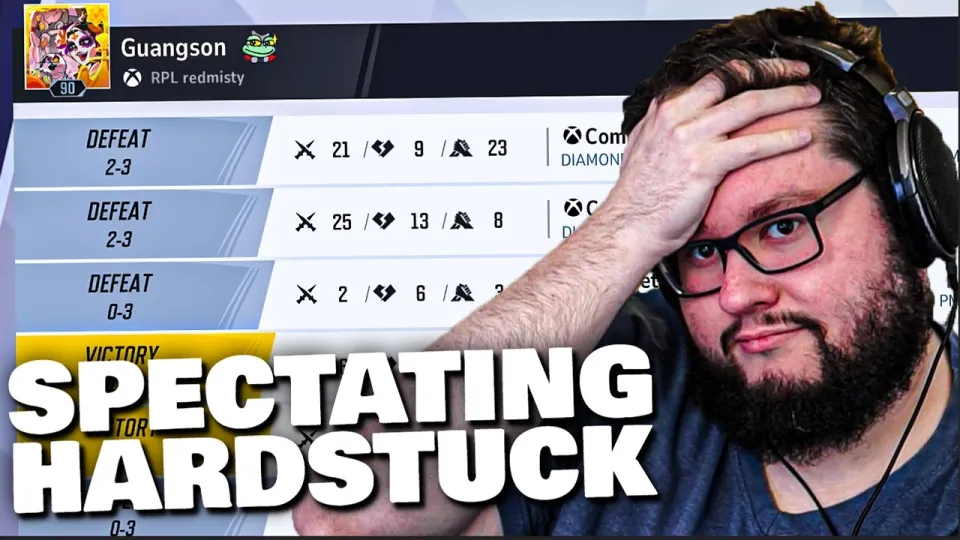
No, Marvel Rivals matchmaking is not what keeps most self-described hardstuck players stuck. In a spectating session on the Flats channel, a Grandmaster-ranked player who insisted his teammates were the problem showed the classic pattern: a Spider-Man main playing Cloak & Dagger, hiding in Dagger form, missing health packs and blaming everyone else. The rank was high, the fundamentals were not. You can watch the full breakdown live on Flats' Twitch channel, where ranked Marvel Rivals reviews and spectating sessions run regularly.
What the Marvel Rivals hardstuck spectating session actually showed
The core finding is that the player's rank and his self-image did not match his gameplay. He was not in a low tier fighting uphill against smurfs; he was in Grandmaster, a bracket where players are expected to understand cooldown management, positioning and ultimate economy. Instead, the review surfaced a set of recurring mistakes that are easy to spot from the outside and hard to notice from inside your own matches.
Key observations from the session:
- Hero identity confusion. A Spider-Man main locked Cloak & Dagger, a support pick, and then played almost entirely as Dagger. Dagger is the healing half of the kit; Cloak brings the blind, the damage amplification and the escape. Ignoring Cloak removes half the hero's value.
- Invisibility used as a hiding tool. The cloak ability was spent to avoid fights rather than to reposition, escape a dive or set up a blind. A defensive cooldown burned out of fear is a cooldown the enemy team never has to respect.
- Health pack blindness. The player walked straight past a health pack while apparently looking for a health pack, a moment that underlines how much of ranked play is map awareness rather than aim.
- Ultimate discipline. A Magneto ultimate whiffed badly enough that the character's defeat read as disappointment, which is what happens when ultimates are thrown out on cooldown instead of on a read.
- The ego gap. The player entered the session convinced his teammates were holding him back, and left with the opposite conclusion on record.
Why a negative win rate can still climb in Marvel Rivals
Marvel Rivals awards ranked progress through performance-based points, not only through wins. That design means a player can lose more games than he wins and still drift upward if he accumulates enough individual score, and it explains how shaky fundamentals end up in Grandmaster. The system is generous by design, which is good for retention and bad for the accuracy of rank as a skill signal.
The practical consequence is that rank inflation is real. A player who grinds volume, plays a high-stat support, and never reviews his own mistakes can reach a bracket where opponents punish every bad cooldown. Once there, he experiences exactly what the spectated player described: losses that feel unfair because the mistakes causing them are invisible to him. The climb was free; the plateau is earned.
The hero-pick problems behind a Marvel Rivals plateau
Hero choice is the fastest diagnostic in any Marvel Rivals review, and this session is a clean example. A Spider-Man main on Cloak & Dagger is not automatically a bad pick, but it requires understanding two kits at once, and the player demonstrated comfort with neither. Playing Dagger only means the team gets a heal stream and nothing else: no blind to break a dive, no damage window on a tank, no escape for the support line.
The same logic applies to the Rocket Raccoon question that came up around the session. A no-damage Rocket build is a popular justification for passive play, and it damages the hero's reputation more than it helps teams. Rocket's gun contributes real pressure, his revive beacon changes fights, and his mobility lets him take off-angles safely. Treating him as a heal turret with legs gives away most of that kit. In both cases the pattern is identical: the player picks a hero for the fantasy and ignores the responsibilities.
Typical viewer questions about hardstuck players in Marvel Rivals
Viewers watching this kind of breakdown tend to land on the same doubts, and they are worth answering directly.
- "Isn't it sometimes genuinely the teammates?" Sometimes, yes. No player wins every game, and support players in particular absorb losses caused by others. The test is whether the same mistakes repeat across ten reviews, not whether one game was unlucky.
- "Does Grandmaster mean anything anymore?" It means the player grinds and produces stats. It does not guarantee clean cooldown usage, positioning or ultimate timing, and the session showed all three slipping at that rank.
- "Is this just content, or is it useful?" The value is in the pattern recognition. Watching someone else walk past a health pack makes you notice your own routing, and watching a wasted invisibility makes you ask what your escape cooldown is actually for.
- "Should I switch heroes to climb?" Switch to something you can play completely, not something that looks strong. A one-trick who understands his kit usually outperforms a flex player who half-understands five.
What actually fixes a Marvel Rivals rank plateau
Fixing a plateau starts with recording your own games and watching them without commentary. The three habits that separate climbing players from stuck ones are boring and effective:
- Track one cooldown per match. Pick your escape or your defensive tool and count every time you use it without pressure. Most stuck players will find they burn it constantly.
- Learn the map's health economy. Know where packs sit on every route you take, so healing is a decision rather than a search.
- Play both halves of a kit. If you lock Cloak & Dagger, you owe your team the blind and the damage amp, not just the heal beam.
- Review losses for your first death. The first death usually explains the shape of the whole round.
None of this requires a new account, better teammates or a different matchmaking algorithm. It requires accepting that the common factor in every loss is you.
Flats' Marvel Rivals links and where to find the breakdowns
All of the channels and communities connected to the video are listed below.
- Twitch, live ranked reviews and spectating: https://www.twitch.tv/flats
- Discord community: https://discord.gg/flats
- Twitter/X: https://twitter.com/Flats_Ow
- TikTok: https://www.tiktok.com/@flats_ow
- Facebook: https://www.facebook.com/FlatsTTV
The verdict on Marvel Rivals and the hardstuck excuse
The spectated player proved that teammates can hold you back, just not in the way he intended: his own decisions did the holding. Marvel Rivals' performance-based ranked system lets players climb on volume and stats, so a Grandmaster badge can sit on top of Silver-level habits, and the gap only becomes visible when someone watches the replay. The lesson is not that the game is unfair, but that rank is a starting point for review, not proof of skill. Flats built the entire breakdown around that gap between self-perception and gameplay, and the format works because the mistakes are so ordinary. If you want more of these live reviews, follow Flats on Twitch and watch the next session as it happens.
Key takeaways
- A self-described hardstuck Marvel Rivals player was spectated in Grandmaster rank, not a low tier, and still blamed teammates for his losses.
- The player was a Spider-Man main running Cloak & Dagger as a support, and spent most of the match in Dagger form instead of swapping to Cloak for utility.
- He walked past a health pack while searching for a health pack, and his invisibility was used to hide from fights rather than to escape or reposition.
- A Rocket Raccoon played with a no-damage style, which the breakdown argues hurts the team more than it helps.
- Marvel Rivals allows rank climbing with a negative win rate through performance points, which is why high ranks contain players with shaky fundamentals.
Source: I Spectated Someone Who Claimed To Be Hardstuck In Marvel Rivals · Markdown version
Questions & answers
Why do Marvel Rivals players with a negative win rate reach Grandmaster?
Ranked progress in Marvel Rivals is partly performance-based, so individual score can offset lost matches. A player who grinds a lot of games and puts up decent stats will drift upward even with more losses than wins. That is how shaky fundamentals end up in high brackets.
Is Cloak & Dagger a bad pick for a Spider-Man main?
Not automatically, but it demands competence with two kits. Playing only Dagger gives up the blind, the damage amplification and the escape that Cloak provides. If you cannot use both halves under pressure, the pick is costing your team value.
Does playing Rocket Raccoon without dealing damage work?
It is a weak justification for passive play. Rocket's gun applies real pressure, his revive beacon can swing fights and his mobility allows safe off-angles. Treating him purely as a heal station wastes most of the hero's kit.
How do I tell whether my teammates or my own play is holding me back?
Review several of your own losses and look for repeated patterns rather than single unlucky moments. If you keep burning escape cooldowns early, missing health packs or wasting ultimates, the common factor is your decisions, not the matchmaking.